Welcome to access blog.
We bring news from around the world, lifestyle, sports and celebrity gist.
To get the latest from our daily update, follow us on twitter @nutexyorksy or subscribe with your email.
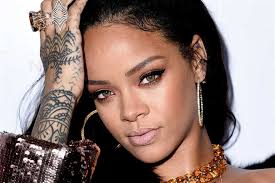
Rihanna is putting in "Work, work, work, work, work.The singer's "Anti" album has returned to the top of the Billboard 200 chart, and she's speaking out on rumors that she has an ongoing feud with fellow superstar Beyoncé.
Nonsense, Rihanna told Vogue.
"Here's the deal," Rihanna said. "They just get so excited to feast on something that's negative. Something that's competitive. Something that's, you know, a rivalry. And that's just not what I wake up to. Because I can only do me. And nobody else is going to be able to do that."
The singer, who graces the cover of the magazine's April issue, said she is very much bored with music's pop formula. With her new album, "I just gravitated toward the songs that were honest to where I'm at right now," she said.
The strategy appears to be working, as Billboard reports that "Anti" is Rihanna's second No. 1 album and the first to spend more than a week at No. 1.
Rihanna is currently on tour to support the album, and a fan recently shocked her with his vocal skills.
The singer extended her mic to Terah Stewart at her concert in Cincinnati on Saturday and got quite the surprise when he perfectly sang a bit of her song "FourFiveSeconds." She responded, "Oh, s**t."
Arsenal Ladies is celebrating the signing of Nigeria international Asisat Oshoala from Liverpool, where she scored three goals in 12 league appearances for the Reds. The 21 year-old striker is the first player from Africa to feature in the Women’s Super League.
Salah Abdeslam, 26, has been on the run for months since the attacks in November in Paris which left 130 people dead [EPA]
Salah Abdeslam, the most wanted suspect for the Paris attacks, has been arrested in a shootout with heavily-armed police in the Belgian capital after eluding capture for months.Belgian Prime Minister Charles Michel and French President Francois Hollande confirmed the arrest on Friday at a press conference in Brussels.It was a success against terrorism," said Michel, as he congratulated the security forces who carried out the raid. France's Hollande said "police were confronted with armed resistance" from the suspects during the raid, adding that the fight against "terrorism" was far from over.
"Though this arrest was an important step, it is not the final result. There will be further arrests. We know the network is extensive in Belgium, France and other countries," he said.
"What we need to do is arrest all of those who allowed, organised and facilitated these attacks [in Paris]. We have realised, without going into details, they are far more numerous than we thought."
Hollande added that he had "no doubt that the [French] judicial authorities will request an extradition".
The four-month manhunt for 26-year-old Abdeslam came to an end in the Brussels neighbourhood of Molenbeek with the suspect shot in the leg, according to Ahmed El Khannous, the neighbourhood's deputy mayor.
Four other people, including members of a family who harboured Abdeslam, were also arrested, said Belgian federal prosecutor Eric van der Sypt. He confirmed that Abdeslam was lightly injured during the raid and had been transferred to hospital. Footage showed heavily-armed police dragging a man whose face was covered by a white hood into the street and bundling him into the back of a waiting unmarked car. It was not clear from the pictures if the man was Abdeslam.
Fingerprints found
Earlier, the Belgian federal prosecutor's office said Abdeslam's fingerprints had been found in a separate raid this week.
Who is Salah Abdeslam?
Born in Brussels, Salah Abdeslam is a 26-year-old French national and the brother of 31-year-old Brahim Abdeslam who blew himself up on November 13 in the Comptoir Voltaire restaurant.
He was at one point suspected of having joined his older sibling in targeting restaurants and bars during the Paris attacks, but his exact role in the violence has yet to be determined.
Investigators know that he was in Paris and believe that he at the very least offered logistical support to the attackers. They are considering whether he planned to carry out his own attack, but backed out.
After four months on the run, he was arrested in Belgium on March 18.
His prints were discovered in an apartment in the neighbourhood of Forest, in south Brussels, after that raid on Tuesday.
Local media said the evidence showed it was "more than likely" that Abdeslam was one of two people who escaped had escaped the operation, in which one gunman was shot dead by a police sniper.
The suspect killed was named as 35-year-old Algerian, Mohamed Belkaid.
Investigators said that, when they later entered the flat, they found a book on Salafism and a Kalashnikov rifle next to Belkaid's body.
They also discovered a flag of the Islamic State of Iraq and the Levant (ISIL, also known as ISIS) group in the flat, as well as a large amount of ammunition. No explosives were found, the prosecutor said.
Abdeslam, a French national, was born in Brussels and once lived in the city.
Police believe he was directly involved in the November 13 attacks in Paris that left 130 people dead and hundreds wounded, as armed men and suicide bombers targeted the Stade de France stadium, the Bataclan concert hall, cafes and bars.
He is suspected of renting the car that delivered attackers to the Bataclan concert hall where more than 80 people were killed.
He fled the city after the attacks, which were claimed by ISIL. Hours later, he was stopped and questioned by police at the French-Belgian border before he was allowed through.
Several of the suspected attackers had links to neighbouring Belgium.
Abdeslam's older brother was among the suicide bombers who killed themselves during the rampage. The younger Abdeslam was driven back to Brussels from Paris hours later.
An explosion has rocked the diplomatic area of the Afghan capital, Kabul, police have said, with at least three people killed and 18 injured.
Police say it was a suicide attack on a foreign military convoy travelling in the area.
There is no word on any foreign casualties.
No group has said it carried out the attack, although in recent months Kabul has been regularly targeted by the Taliban in a series of bombings.
The explosion took place in Macroyan area, which is also not far from Kabul airport and the presidential palace.
Kabul has been regularly targeted by the Taliban in recent months An interior ministry spokesman quoted by the AP news agency said the blast destroyed more than a dozen civilian vehicles.
The bombing, close to a civilian hospital, is the latest in a series of recent deadly attacks following the announcement of a new Taliban leader.
Earlier this month, a Taliban suicide bomber attacked a checkpoint near the entrance to the international airport in Kabul, killing five people.
Before that, there were three deadly attacks in the city - on a police academy, a Nato base and an Afghan army base that killed at least 50 people.
The Taliban has stepped up its campaign of violence in recent months, taking advantage of the warmer weather of spring and summer. It has made some military gains, especially in northern Afghanistan.
In the gorilla world Koko is a bit of a celebrity. At least, to humans. She's known for her incredible sign language skills, learnt in her 40 years of living with humans.
She's a Western Lowland gorilla and started her training when she was one.
She blows "raspberries" with her tongue and was observed pretending to talk on the phone
If you've read the headlines, you could be forgiven for thinking that Koko was in the process of mastering the ability to talk. "The most famous gorilla is showing signs of earth speech" – wrote one influential website. "She is showing signs that she may be able to learn to talk" a newspaper wrote. You get the idea.
But is this true, is Koko really showing any such ability?
Spoiler alert:
In short no. What Koko can in fact do, is manipulate her vocal chords to create an assortment of sounds. For example, she coughs on cue:
Well, I hear you say, that's not quite as exciting as a gorilla being able to talk. True, but it's still an interesting finding, one which - along with similar studies - is changing our idea of how speech evolved.
To understand why, I spoke with the man behind these new observations of Koko, Marcus Perlman of the University of Wisconsin-Madison, US.
Their grunts are not only meaningful, but can change over time
He sifted through 71 hours of footage of Koko and started noticing some "amazing vocal repertoires". His intention was to look at her gestures, not her vocal abilities, so he was surprised by what he discovered.
As well as her fake coughes, she also fakes sneezes, blows "raspberries" with her tongue and was observed pretending to talk on the phone.
These behaviours all require her to control her vocalisation and breathing. The observations are
Apes have many vocal repertoires (Credit: ImageBROKER/Alamy)
There has been a longstanding idea that all non-human primates, such as great apes such as chimpanzees and gorillas, were unable to control their vocal sounds at all.
It was thought their grunts were just automatic response to stimuli. It was also not believed possible for apes to learn new vocalisations.
These flexible sounds may have been the framework on which our language capacity was built
Because of that, the idea that "flexible vocal behaviour" was important to human speech was dismissed, says Perlman.
Instead, gestures were deemed more important and we have long known that apes can make distinct, meaningful gestures. The idea was that "maybe their gestures evolved into human language, and maybe the original language of our ancestors were more gesture-like," Perlman explains.
Backwards puzzle
Koko, along with other studies, puts this idea to rest. For example, other research found that chimps changed the type of grunt they use to signal the word 'apple', to make it align with their new companions. This shows that their grunts are not only meaningful, but can change over time.
If apes have these vocal abilities, in addition to gestures, their flexible sounds may have been the framework on which our language capacity was built over the course of millions of years, says Perlman.
It's funny that there is so much excitement over the gorilla that coughs
This all points to one thing: the fact that apes are able to manipulate their vocal sounds suggests our common ancestor did too.
It's like a backwards puzzle, all other early-humans have gone extinct, so we can only look at living apes to infer how our extinct ancestors may have developed language abilities.
Koko, we must remember, grew up in unique circumstances and was immersed in human interaction from birth. Her repertoire of meaningful gestures is therefore unusually large.
What do other researchers think?
Joseph Devlin from University College London's department of experimental psychology, in the UK, also studies the evolution of language.
She exhibits conscious control of her breathing like we do
It's funny that there is so much excitement over the gorilla that coughs, he says. Still, though it sounds banal, "there is something cool here".
"Speech is impossible without cognitive control of breathing. So grunts, chuffs and the noises that other primates make might just be emotional vocalisations that occur automatically without conscious control.
"The fact that Koko can blow her nose or fake a cough when asked to demonstrates that she exhibits conscious control of her breathing like we do."
Language has many aspects to it. Koko's gestures and grunts may seem mundane but they represent crucial manipulations, the ability of which is important in everday speech.
Language in its full form may be unique to humans, but every species has traits which make them unique. As Darwin said, we differ from our closest relatives in degree, not kind.
many traits which we once believed were unique to humans are found in the animal kingdom.
Devlin agrees.
"Perhaps what is unique to humans is that we may be the only species that has *all* of these abilities. But it is increasingly evidence that most, if not all, of the component abilities that make up language are also found in other species, and that’s pretty exciting."
Unmanned NASA rocket Antares explodes
(Reuters) - An unmanned Antares rocket exploded seconds after
liftoff from a commercial launch pad in Virginia on Tuesday, marking the
first accident since NASA turned to private operators to deliver cargo
to the International Space Station.
The 14-story rocket, built and
launched by Orbital Sciences Corp, blasted off its seaside launch pad
at the Wallops Flight Facility at 6:22 p.m. EDT/2222 GMT, carrying a
Cygnus cargo ship bound for the space station. It burst into flames
moments later, then plunged to the ground in a huge ball of fire and
smoke, but authorities said no one was hurt.
The six crew members
in orbit aboard the space station - two NASA astronauts, one from the
European Space Agency and three Russian cosmonauts - watched the launch
via a NASA TV feed, said Mike Suffredini, the space station program
manager.
We're sorry, but your browser does not support this video. Please install Adobe Flash version 10 or later.
Zambian
President Michael Sata has died at the age of 77 after receiving
treatment for an undisclosed illness, the government says.
President Sata, who was being treated in the UK, died in London's King Edward VII hospital on Tuesday night.
Media said that he died after "a sudden onset [of] heightened heart rate".
It is not immediately clear who will succeed the president.
The issue may be decided by the Zambian cabinet which meets on Wednesday
morning.
"It is with a heavy heart that I announce the passing on of
our beloved president," cabinet secretary Roland Msiska said on national
TV.
He said that Mr Sata's wife and son were at his bedside.
"I urge all of you to remain calm, united and peaceful during this very difficult period," Mr Msiska added.
Obituary: Penny Dale, BBC's former Zambia correspondent
Gravelly-voiced as a result of years of chain-smoking, Michael
Sata rose to political prominence in the 1980s. He quickly earned a
reputation as the hardest-working governor while in charge of Lusaka and
as a populist man of action. But he was also known for his
authoritarian tendencies, an abrasive manner and a sharp tongue - and
his critics say his nickname of "King Cobra" was well-deserved.
A devout Catholic, Mr Sata had worked as a police officer,
railway man and trade unionist during colonial rule. After independence,
he also spent time in London, working as a railway porter, and, back in
Zambia, with a taxidermist company.
On the fourth attempt, Mr Sata won presidential elections in
2011. At first he looked as if he would keep promises to tackle
corruption and create jobs and prosperity. But his term in office was
marred by a crackdown on political opposition and a decline in the
economy.
'King Cobra'
The president's death comes just days after Zambia celebrated the 50th anniversary of independence from the UK.
Earlier this month reports in Zambia said that President Sata
had gone abroad for a medical check-up amid persistent speculation that
he was seriously ill.
After he left the country, Defence Minister Edgar Lungu was named as acting president.
Vice-President Guy Scott has regularly stood in for the
president at official events. But he is of Scottish descent and his
parents were not born in Zambia, so he may fall foul of a constitutional
clause on parentage which would nullify his candidacy.
Known as "King Cobra" for his venomous tongue, Mr Sata was
elected Zambia's president in 2011, defeating the then incumbent Rupiah
Banda whose party had been in power for 20 years.
He has rarely been seen in public since returning from the UN
General Assembly last month, where he failed to make a scheduled
speech.
A campaign calling for a halt to the execution of
Reyhaneh Jabbari was launched on Facebook on
Monday
An Iranian woman due to be put to death for
killing a man she said was trying to sexually
abuse her is reported to have had her execution
postponed.
Officials said on Monday that Reyhaneh Jabbari,
26, had been transferred to a prison west of
Tehran to be hanged.
But activists claimed on Tuesday that an online
campaign had persuaded the state to give her a
10-day reprieve.
The human rights group Amnesty International
said she was convicted after a deeply flawed
investigation.
Ms Jabbari was arrested in 2007 for the murder of
Morteza Abdolali Sarbandi, a former employee of
Iran's Ministry of Intelligence.
She was placed in solitary confinement for two
months, where she reportedly did not have access
to a lawyer or her family, and was sentenced to
death by a criminal court in Tehran in 2009.
Amnesty said that although Ms Jabbari admitted to
stabbing Mr Abdolali Sarbandi once in the back,
she alleged that there was someone else in the
house who actually killed him.
Her claim is believed to have never been properly
investigated.
Protest
The authorities appeared to be pressing ahead with
the execution on Monday, when they confirmed
that Ms Jabbari had been transferred to Rajaishahr
prison and would be hanged.
A campaign calling for a halt to the execution was
launched on Facebook and Twitter, using the
hashtag #SaveReyhanehJabbari. Photographs of a
protest outside the prison were also posted.
On Tuesday, activists and bloggers reported that
Ms Jabbari's execution appeared to have been
postponed so that Mr Abdolali Sarbandi's family
could be consulted.
They cited a letter reportedly written by Ms
Jabbari's mother, Sholeh Pakravanin, thanking
people for their support and efforts to save her
daughter's life.
The development comes after activists said a
former psychologist had been executed for
"corruption on Earth and heresy in religion" near
the city of Karaj on Wednesday.
Mohsen Amir Aslani, 37, was arrested nine years
ago after giving religious classes in which he
provided his own interpretations of the Koran, they
said. He was subsequently accused by the
authorities of insulting the Prophet Jonah, the
activists added.
Iran's judiciary has denied that Mr Amir Aslani's
execution was linked to his religious beliefs.
Officials instead accused him of having had illicit
sexual relationships with a number of people who
attended his classes, the Guardian said
KINGSLEY OMONOBI-ABUJA.
Details of how Abubakar Shekau, the impostor and
leader of the Boko Haram terrorist group lost his left
in a shootout with Nigerian troops in Konduga on
Wednesday Sept. 17 emerged yesterday with military
sources disclosing that he met his waterloo in an
ambush reminiscent of the type the sect had been
using to hack down Nigerian troops.
Vanguard gathered that when the first attack on
Konduga whereby hundreds of insurgents were
taken unawares and killed after over seven hours of
fighting and several of their colleagues, arms and
ammunition captured, the military commanders
strategically urged his captured members to send a
message to Shekau that they (insurgents) have
routed the troops.
Before the captured insurgents were urged to make
the contact and deliver the message, the military
commanders had promised them that their
cooperation would play a role in the level of
punishment to be meted to them after the battle
hence they felt reassured.
Also, the captured insurgents had disclosed that
Shekau usually moved in a convoy of cars painted in
military colours while he sits in a MOWAG Armoured
tank with Boko Haram inscription on its front.
When Shekau was contacted, his captured men
spoke to him in Arabic, assuring him that they had
taken over Konduga, thereby giving him the all clear
to proceed from Sambisa Forest. To convince him
further, a set of his men captured were told to sing
the victory song in Kanuri language they normally
sing at the background.
Having convinced himself that the messenger was
his chief courier in such situation and the message
is authentic, he and his followers made for Konduga,
heavily armed with Anti-Aircraft weapons, General
Purpose Machine Guns, several AK 47 rifles and
other IEDS’.
However, on entering Konduga town, he and his
followers were encircled by strategically placed and
heavily armed Nigerian soldiers. Immediately he
contacted the messenger and discovered that
something was amiss, he ordered his followers to
start shooting in all direction.
This spurred the Army Commanders to give the
directive to open fire. When he discovered that the
fire power of the Nigerian Army who used both
Infantry and Artillery weaponry was overpowering
that of his men, he jumped out of the MOWAG and
made to escape.
But eagle-eyed Nigerian Soldiers spotted him and
opened fire in him, shattering his legs in the
process. It was learnt that he also received bullet
wounds in other parts of his body leading to his
bleeding to death.
Recall that Military sources had on Sunday night
disclosed that Nigerian troops scored a strategic
victory in the current battle against terrorists
operating in the North East on September 17.
The sources noted that during a desperate attempt
to capture Konduga in their delusion to eventually
marching on and capturing Maiduguri, the man who
had been mimicking Late Abubakar Shekau in recent
videos was feared to have been finally killed.
The sources said, “It is getting more certain that the
terrorists’ Commander who has been mimicking
Shekau in those videos is the one killed in Konduga
on September 17, 2014.”
Affirming the development, PRNigeria sources said
the suspected demise of the Boko Haram leader is
responsible for the scattering of the sect members in
different independent locations in the neighbouring
countries, especially in Cameroon noticed in recent
days.
The security sources noted further that “the process
of confirming that the dead body we have is the
same as that character who has been posing as
Shekau is ongoing” adding “He is definitely a
prominent terrorist commander. I don’t want to say
anything about this yet please.”
Another high ranking military source insisted that
the resemblance is too striking to be a coincidence.
“They cited his facial marks, beards and teeth apart
from the recovery by the Nigerian troops of some of
the Armoured Vehicles and Hilux jeeps that had
featured in previous videos of the prime suspect.
“The officers assured that the Defence Headquarters
will soon address the nation after full investigation of
their latest discovery”.
Meanwhile, the Defence headquarters yesterday
dismissed insinuation that Cameroonian military
personnel carried out raids on Boko Haram terrorists
into border communities in Nigeria.
According to a report posted on its twitter handle,
DHQ said “There was no raid whatsoever in any part
of Nigeria’s territory in pursuit of terrorists as
claimed in some reports allegedly quoting Cameroon
military authorities”.
“All operations ongoing in the environs of Konduga
and all associated border location within the country
are completely being undertaken by Nigerian troops”
Charleigh Disbrey and Mert Karaoglan
A girl of 15 and her Turkish sweetheart ran hand in
hand into the path of a high-speed train because
they feared his family disapproved of their
relationship.
Charleigh Disbrey and Mert Karaoglan, 18, had been
together only a month but chose to die together
rather than be forced apart by ‘cultural issues’. Mert
sent a picture message to a friend of the pair on a
bridge over the railway line, saying they would
‘never be together in this life and would rather be
together in a different place’.
They then climbed a 6ft fence to get on to the tracks
at the busy Elstree and Borehamwood station in
Hertfordshire.The driver of an empty London First
Capital Connect train saw them running down the
line but was unable to avoid hitting them. According
to an inquest, they died of multiple massive injuries.
Graham Danbury, Hertfordshire’s deputy coroner,
told the hearing: ‘Because of Mert’s background it
seems like a relationship between him and Charleigh
would not have been approved by his family.
And it seems to me that such was the intensity of
their feelings for each other that they ignored the
effect that their acts would have on others – their
family, their friends and the train driver – and
decided that they wanted to be together in death.’
The young lovers attended Hertswood Academy near
their Borehamwood homes. Charleigh, who was
studying for her GCSEs, had auditioned for the TV
shows Britain’s Got Talent and Must Be The Music.
She had posted videos of herself on YouTube
playing an acoustic guitar and had written on her
website that she wanted to become a musician ‘to
be remembered’. Mert, who was said to be a
talented film-maker and photographer, was studying
for his A-levels.
The inquest heard Charleigh had taken overdoses
and had expressed suicidal tendencies in the month
leading up to her death on June 17 last year.
In a statement, Mert’s father Sukru Karaoglan, 49,
told the inquest: ‘Mert got up earlier than usual and
went straight out to school without breakfast or
speaking to the family.
‘He didn’t get home until after 5 o’clock, got
changed and said he was going to meet some
friends.’ He was asked to stay to have a meal with
the family and joined them for a short while before
insisting he had to go. ‘That was the last time the
father saw him,’ said Dr Danbury.
Mert’s friend, Harry Whitlock, told the inquest he had
seemed normal at school that day. At around 7pm
he received the picture of the pair on the bridge and
a text moments before they died at around 9pm
saying: ‘Find my phone. Find the video. I love you.’
Dr Danbury said: ‘In one of these [videos] they gave
some explanation of what they were about to do,
which was to end their lives and they referred to
family and cultural problems and they felt that they
weren’t going to be able to be together in this life
and they would rather be together in a different
place.’
Harry told the hearing he was at the cinema at the
time he received the messages from Mert and was
later told by a friend of the tragic deaths. He said
the last picture on the bridge ‘was just them two
together, just smiling’.
Another friend, Christopher Walker, said he last saw
Mert at 1pm on the day of his death and was told he
would be sent some internet passwords.
He added: ‘He told me he had met his soulmate. I
think this meant the girl I know he had been seeing
for the last month. He was happy. He gave me a big
hug, and left.’
Charleigh, known as CJ, also sent a number of texts
before her death saying sorry and telling them she
loved them. In one, she wrote: ‘I have met the most
amazing person – he is my life.’
There was no answer at the flat where Mert lived
with his family. Neighbours said they returned to
Turkey earlier this year and Mr Karaoglan had made
occasional trips back.
Dr Danbury recorded verdicts of suicide at the
hearing in Hatfield.
Culled from DailyMail
Hong Kong: Tear gas and clashes at
democracy protest
28 September 2014 China
Hong Kong police have used tear gas to disperse
thousands of pro-democracy protesters near the
government complex, after a week of escalating
tensions.
Dozens of demonstrators were arrested, with
hundreds vowing to stay put to continue the
protest.
Protesters want the Chinese government to scrap
rules allowing it to vet Hong Kong's top leader in
the 2017 poll.
Hong Kong Chief Executive CY Leung said the
demonstration was "illegal" and elections would go
ahead as planned.
China has also condemned the protest, and offered
"its strong backing" to the Hong Kong
government.
The broader Occupy Central protest movement
threw its weight behind the student-led protests
on Sunday, bringing forward a mass civil
disobedience campaign due to start on
Wednesday.
Regrouping
Protesters blocked a busy thoroughfare that runs
through the heart of Hong Kong's financial district
on Sunday, clashing with police as they tried to
join a mass sit-in outside government
headquarters.
Police used pepper spray and repeatedly shot tear
gas into the air to drive back the protesters from
the busy Connaught Road. Protesters used
umbrellas and face masks to defend themselves.
Many protesters remained in one of central
Hong Kong's main avenues on Sunday evening
Crowds of protesters were earlier dispersed by
volleys of tear gas but later returned
As evening fell, the police lobbed tear gas
canisters into the crowd, scattering some of the
protesters. But many of the demonstrators
regrouped and retreated to a nearby park.
According to the AFP news agency, some 3,000
protesters blocked a second major thoroughfare in
the Mongkok district of Kowloon late on Sunday.
At the scene: Juliana Liu, Hong Kong
correspondent
After clashes with police earlier in the week, pro-
democracy protesters appeared to be much better
prepared on Sunday.
Many arrived sporting raincoats or wrapped in
plastic with swimming goggles over their eyes -
items chosen to protest against the sting of tear
gas and pepper spray.
Still, there was surprise and chaos when the first
round of tear gas was fired in the early evening.
Thousands of people ran for cover when the
canisters hit the ground, spewing white smoke and
a distinctively sharp smell into the air.
I was helped by a middle-aged couple who
noticed my growing baby bump and were
concerned for my health. They pressed a water-
soaked blue handkerchief into my face to reduce
the amount of tear gas I would breath in. But they
disappeared before I could thank them properly.
The student organisers behind the protest, the
Hong Kong Federation of Students, have appealed
for students to retreat due to fears that police
could use rubber bullets to disperse the crowd.
A co-organiser of Occupy Central, Chan Kin-man,
says he supports the students' decision.
Police said they had arrested 78 people on Sunday
on charges of "forcible entry into government
premises, unlawful assembly, disorderly conduct in
public place, assaulting public officers and
obstructing police officers in due execution of
duties".
It comes after the arrest of more than 70 people in
Saturday's protests, including prominent student
activist leader Joshua Wong, who has since been
released.
Thousands joined a sit-in organised by students
outside government headquarters this weekend,
bolstering a week-old protest, which began as a
strike by students calling for democratic reforms.
Occupy Central had originally planned to paralyse
the central business district next Wednesday, but
organisers advanced the protest and changed the
location in an apparent bid to harness momentum
from student protests.
The announcement came early on Sunday, with a
statement by the movement saying Mr Leung had
"failed to deliver on political reform".
But speaking in his first public statement since the
protests began, Mr Leung said that he and his
government had "been listening attentively to
members of [the] public".
He said that political consultations would continue
on the planned changes but warned that "resolute"
action would be taken against the "illegal
demonstration".
Umbrellas were used by activists to avoid the
effects of tear gas and pepper spray
The main thoroughfare in central Hong Kong
was blocked for several kilometres in each
direction
Students and activists have been camped
outside the government premises all weekend
The protesters had also called for further talks but
it is not clear how far - if at all - Mr Leung's
mention of further consultations will be seen as
recognising their demands.
A spokesman for China's Hong Kong and Macau
affairs office said that Beijing "firmly opposes all
illegal activities that could undermine rule of law
and jeopardise 'social tranquillity' and it offers its
strong backing" to the Hong Kong government,
Xinhua news agency reports.
Police protected a cordon outside the
government offices on Saturday night
Unrest began when the Chinese government
announced that candidates for the 2017 chief
executive election would first have to be approved
by a nominating committee.
Activists have argued that this does not amount to
true democracy.
Cash Kings 2014: The World's Highest-
Paid Hip-Hop Acts
Dr. Dre's $620 million is not only the highest annual
total of any entertainer ever evaluated by FORBES,
it’s more than the combined earnings of all 24 of his
companions on the list.
27 September 2014 Updated 19:26 GMT
By Phil McNulty - Chief football writer
Alex Oxlade-Chamberlain's
strike kept Arsenal above
Tottenham in the table
Oxlade-Chamberlain scores first goal of the
season
Ramsey and Arteta go off injured
Arsenal enjoy 69% possession
Spurs have six shots to Arsenal's 16
Alex Oxlade-Chamberlain ensured honours were
even as Arsenal and Tottenham fought out an
entertaining north London derby at Emirates.
Nacer Chadli's fourth goal in fivea Premier League
appearances this season gave Spurs the lead early
in the second half, but Oxlade-Chamberlain hit
back with 15 minutes to go.
Arsenal, disrupted by first-half injuries to Mikel
Arteta and Aaron Ramsey, pressed for a winner but
Mauricio Pochettino's side stood strong in defence
and ultimately a draw was the right result.
The result moves Arsenal into the top four behind
predictable pace-setters Chelsea and Manchester
City, as well as Southampton, who continue their
excellent start to the season.
Spurs boss Pochettino confessed his
disappointment at the manner of his side's display
in the home defeat to West Bromwich Albion last
weekend but there was plenty on show here to
satisfy the Argentine.
And Arsenal counterpart Arsene Wenger, while
perhaps wanting more than a draw at home, will
also have been pleased at the resilience they
showed in the face of the enforced changes that
had an impact on their rhythm.
Alexis Sanchez's relegation to the bench was
surprising, given his early influence on Arsenal's
season, but the Chilean has had a busy schedule
following his £32m summer move from Barcelona.
Nacer Chadli scored his
fourth goal in five Premier
League appearances this
season for Spurs
The main feature of the first half was Pochettino's
constant technical area exhortations for his players
to press Arsenal in possession, a demand that led
to very visible rebukes for Christian Eriksen and
Emmanuel Adebayor within seconds in the opening
half.
Adebayor will have further drawn his manager's
disapproval when he dawdled over a clear chance
with time and space inside Arsenal's area, while
Chadli was also wasteful when in a good position.
Arsenal's were hit by those injuries to Arteta and
Ramsey, which necessitated their replacement by
Mathieu Flamini and Santi Cazorla before half-
time. Jack Wilshere also required lengthy treatment
after turning his right ankle.
Aaron Ramsey had to be
substituted due to a
hamstring problem just
before the break
The main moment of danger to Spurs came when
clever footwork from Ramsey to set up Oxlade-
Chamberlain, but his shot from the edge of the
area was well saved by keeper Hugo Lloris.
Pochettino's message to Eriksen about putting
Arsenal under pressure was understood and it
played a key role as Spurs went ahead 11 minutes
after the interval. The Dane pinched possession
from Flamini and played in Chadli to finish cooly.
Arsenal's response was instant and Lloris pulled
off a magnificent save low down to keep out Per
Mertesacker's header - but Spurs were unable to
survive renewed pressure from the Gunners and
the equaliser came after 75 minutes.
Sanchez - on for Wilshere - crossed and Danny
Welbeck's wild air shot in front of goal wrong-
footed the Spurs defence, leaving Oxlade-
Chamberlain to lash high past Lloris.
Arsenal boss Arsene Wenger: "I am frustrated
because we dropped two points and I am frustrated
because we didn't make enough of our set-pieces.
You want to be rewarded for the work you put in.
When asked if Ramsey and Arteta would be fit for
the Champions League game on Wednesday,
Wenger said: "No chance. If it is a muscular
problem I don' t see how they can be fit in five or
six days time."
Tottenham manager Mauricio Pochettino: "I think it
is a good result for us. Maybe Arsenal controlled
the game and had the ball more than us but we
played well and defended well.
"We scored a great goal. This is our philosophy,
which is difficult to keep for 90 minutes at the
moment, but we are on our way."
There was plenty of action
but little quality in the first
half at the Emirates
Tottenham scored the
opening goal but had only
four shots on target during
the match
Younes Kaboul was
excellent at the heart of
Tottenham's busy defence
Alex Oxlade-Chamberlain
earned Arsenal a point with
his first goal of the season

 Rihanna is putting in "Work, work, work, work, work.The singer's "Anti" album has returned to the top of the Billboard 200 chart, and she's speaking out on rumors that she has an ongoing feud with fellow superstar Beyoncé.
Nonsense, Rihanna told Vogue.
"Here's the deal," Rihanna said. "They just get so excited to feast on something that's negative. Something that's competitive. Something that's, you know, a rivalry. And that's just not what I wake up to. Because I can only do me. And nobody else is going to be able to do that."
The singer, who graces the cover of the magazine's April issue, said she is very much bored with music's pop formula. With her new album, "I just gravitated toward the songs that were honest to where I'm at right now," she said.
Rihanna is putting in "Work, work, work, work, work.The singer's "Anti" album has returned to the top of the Billboard 200 chart, and she's speaking out on rumors that she has an ongoing feud with fellow superstar Beyoncé.
Nonsense, Rihanna told Vogue.
"Here's the deal," Rihanna said. "They just get so excited to feast on something that's negative. Something that's competitive. Something that's, you know, a rivalry. And that's just not what I wake up to. Because I can only do me. And nobody else is going to be able to do that."
The singer, who graces the cover of the magazine's April issue, said she is very much bored with music's pop formula. With her new album, "I just gravitated toward the songs that were honest to where I'm at right now," she said.


![Salah Abdeslam, 26, has been on the run for months since the attacks in November in Paris which left 130 people dead [EPA]](https://lh3.googleusercontent.com/blogger_img_proxy/AEn0k_tg3UH8k_EB_4sWWIRPYT80PRL-XbRKN-oceLxtU0F7niGUL48-FSe5-TLDLbJA7yWXfn8xKgbW0jjHwFihji3ahAk1wKI7Kz1bS72AFFxrjlmrMKXAUhwc5TMSWkH1wU0V6cEXkVcK4n7mkBsQy6c6c6sgf4wrcrVjSdtTC21QgPgH_IMh2hne3-TA8DIP_YNd-BE-j62sEPYj=s0-d "Paris attacks: Salah Abdeslam arrested in Brussels")


